
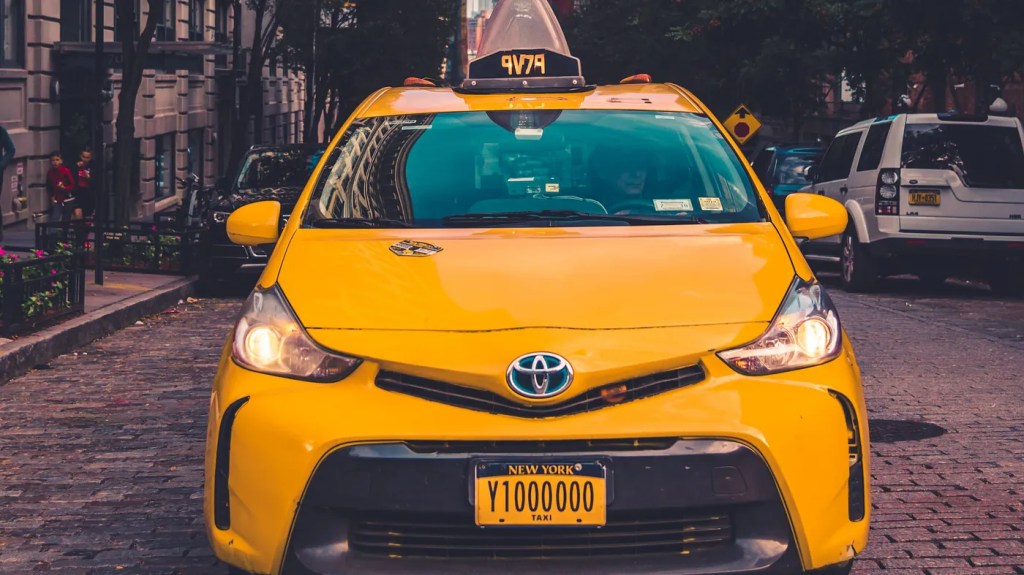
A Passenger’s Fascinating Perspective
I understand that the transition to self-driving public transport will disrupt the current economic landscape, including the threat of many drivers who rely on ride-hailing services losing their income sources. However, as many global players continue to accelerate their development and launch of autonomous cars, and given the rapidly growing and ever-intensifying AI and technological races, transitioning into a transportation ecosystem dominated by self-driving taxis and buses will come sooner or later.
From a passenger’s perspective, this sounds intriguing — under the condition that self-driving public transport is safe and well-regulated. I have primarily been living between the UK and Southeast Asia, so learning that autonomous cars will be launched in late 2025 or early 2026 is fascinating.
United Kingdom
In Spring 2026, Uber will trial robotaxis — autonomous cars with no human safety driver at the wheel — in London. Uber is partnering with the UK artificial intelligence (AI) firm Wayve to develop and test technology that complies with UK legislation. What’s more fascinating is that, other than robotaxis, bus-like services with no human safety driver will be scheduled to launch in Spring 2026 too. As soon as the UK Automated Vehicles Act takes effect in 2027, autonomous ride-hailing services will begin to operate fully for the public.
Using human-driven ride-hailing services is convenient — let’s make no mistake about it — but sometimes the bad manners of drivers may ruin your day to some extent. It’s always a luck-testing game, where you may be matched with well-mannered drivers sometimes, and with slightly rude and grumpy drivers otherwise. Therefore, using autonomous ride-hailing services, if everything goes as planned, is well-regulated and lives up to the safety standards, would seemingly widely enhance the passenger’s experience.
Singapore and Malaysia
As the global race for robotaxi dominance accelerates, Southeast Asia is also actively preparing for the launch of autonomous driving public transport. The Chinese tech giant Baidu is planning to bring its Apollo Go autonomous vehicle services to Southeast Asia as early as late 2025. The Chinese company’s international expansion is gaining speed, and Singapore and Malaysia will be among the first overseas countries to benefit from Chinese tech firms’ global expansion of autonomous driving services.
Unlike Singapore, which is a city-state, Malaysia is one of the geographically bigger and demographically more diverse countries. Therefore, possibly we may not see autonomous driving services to be fully operated countrywide. However, for cities that I mostly live in — Singapore and Kuala Lumpur — very likely local residents can enjoy robotaxi services from as early as late 2025. Other Chinese tech giants, such as WeRide, have also launched their robotaxi globally, such as in Zurich and Abu Dhabi. They are, furthermore, testing and deploying autonomous vehicles in Southeast Asia, led by Singapore.
If the market competition is sufficient, it’s very likely that robotaxis and their equivalents will be charged much cheaper than their human-driven counterparts, at least in the premature operational stage. Together with the optimisation of passenger’s experience, I just cannot wait to benefit from the globally and rapidly expanding autonomous ride-hailing services.
Conclusions
The global landscape has been changing substantially in recent years. Part of the change has been technology-facilitated. As a young adult at 30, I am very optimistic about how technology-led transitions would make our lives and enjoyment of services more convenient and customer-friendly. For example, as a researcher, many AI-powered research tools have been launched that have drastically cut my time and labour needed for research. And the AI-powered research tools are able to cost-effectively and efficiently provide deep analysis that manual labour input fails to deliver.
I am not sure if you are sceptical about the rise of transformative technology. However, so far, I am able to benefit from such transformation to maximise my convenience, productivity and overall life satisfaction. Thus, I will be very happy to see how and whether life can be changed for the better in the years to come.
Thanks for reading my takes on technology and society. If you would like to learn more about (mental) health, personal development, and/or (online) education from me, please feel free to subscribe to my newsletter below. Also, please feel free to browse my blog — Society & Growth — for more content at https://societyngrowth.co.site.




 Society & Growth
Leave a comment